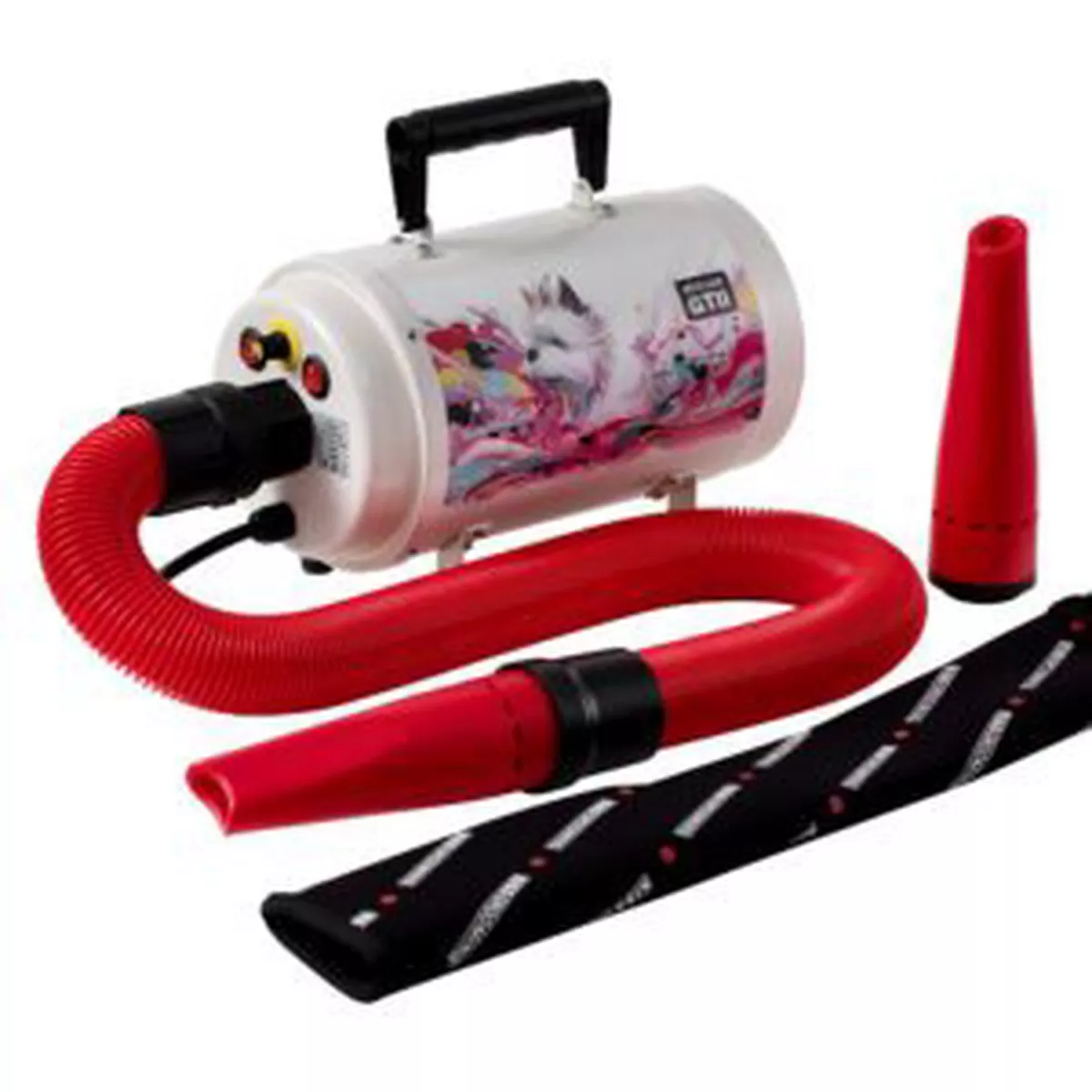
The Aeolus AEOLIAN-II (H-901GT) is widely considered a “workhorse” in the professional grooming world. Its designed to bridge the gap between a portable blaster and a heavy-duty finishing dryer, making it a favorite for both salon pros and high-end home users.
Here is a breakdown of what makes this specific white-finish model stand out:
Key Technical Specs
| Feature | Detail |
| Motor Type | Single Motor (High-speed) |
| Heating Element | Integrated with independent switch |
| Wind Speed | Variable control (up to 38m/s or 59m/s depending on nozzle) |
| Heat Settings | Off / Low / High |
| Housing | Durable, heat-resistant ABS plastic |
Why Groomers Choose the Aeolian-II
-
The “Heat” Factor: Unlike many high-velocity blasters that rely solely on motor friction to warm the air, the AEOLIAN-II has a dedicated heating unit. This is crucial for “fluffing” coats and speeding up the drying process on breeds with thick undercoats.
-
Variable Speed Control: It doesnt just have “High/Low” settings. The dial allows you to precisely adjust the airflow, which is a lifesaver when working on sensitive areas like the face or ears, or when introducing nervous puppies to the dryer.
-
Maintenance Friendly: The filter is easily accessible and washable, which is the best way to ensure the motor doesn’t overheat or lose power over time.
-
Portability: Despite its power, its relatively lightweight and comes with a convenient handle, making it easy to move around the tub or take to shows.
Considerations
-
Noise Level: While it’s quieter than many older industrial models, it is still a high-velocity dryer. If you have a sound-sensitive dog, youll want to start at the lowest setting.
-
Single Motor vs. Dual: If you are drying massive, double-coated breeds (like Newfoundlands or Malamutes) all day long, you might eventually want a dual-motor unit for pure “blast” power. However, for most breeds, this single-motor unit with heat is actually more versatile for styling.
Pro Tip: Always start the dryer away from the dog and gradually bring the airflow toward them to avoid the “startle” factor, especially when the heat is first kicked on.